China Railway is a leader in the field of high-speed trains. The fastest trains in China, according to the Railway Gazette International, have surpassed all of their rivals, with start-to-stop averages exceeding 180 mph (300 km/h).
Typically, a high-speed rail is one that travels at a maximum speed of 124 mph (200 km/h). It has multiple powered components and needs a high level of maintenance.
The first bullet train, also referred to as a high-speed rail system, was created in Japan in 1964. Since then, other nations have created high-speed rail systems to link important cities. China has 2/3 of the world’s high-speed rail network by the end of 2018, covering 18,000 miles (39,000 km).
The list of some of the world’s fastest commercially run trains may be seen below. China Railway Corporation-operated trains make up more than half of the list. China not only has the quickest trains, but it also is adding new ones.
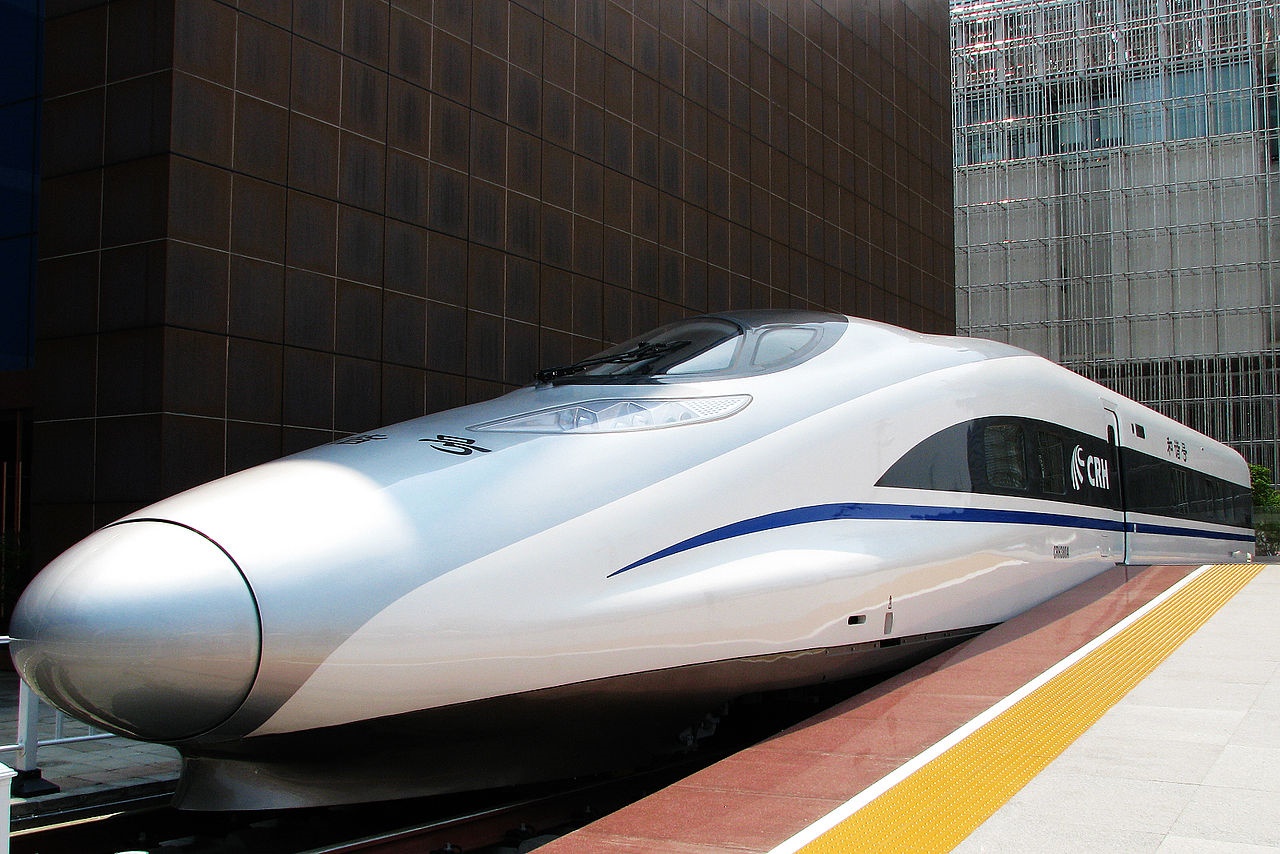
10. CRH2C and CRH3C

CRH3 in Changsha South Railway Station
Top Speed: 217 mph (350 km/h)
Country: China
Operator: China Railway Corporation
Operating since: 2008
A power-distributed, AC-driven electric multiple-unit train using an aluminum alloy hollow profile body is known as the CRH2 series. It is based on the E2 series of the Japanese Shinkansen. The National Railway Science and Technology Award’s top honor went to CRH2A in 2007, and the National Science and Technology Progress Award’s top honor went to its bogie technology.
On the other hand, the CRH3 train is based on the Siemens Velaro platform, which was developed from the German railway ICE-3 train. The CRH3C electric multiple-unit is a power decentralised train made up of two driving units on each of its four motor cars and four trailer cars.
Both trains have a solid body to reduce noise and vibration, strengthened pressure protection systems to prevent pressure fluctuations in the compartment, and improved vehicle windows for better airtightness and strength.
9. AVE

AVE Class 102
Top Speed: 217 mph (350 km/h)
Country: Spain
Operator: Renfe
Operating since: 2005
The national railway company of Spain, Renfe, operates the high-speed rail service known as AVE (short for Alta Velocidad Espanola). The short term, “AVE,” which stands for “Alta Velocidad Espaola,” which translates to “Spanish fast speed,” stands for “bird.”
Although they are capable of far higher speeds, AVE trains, especially Class 102, 103, and 105, are meant to run at a speed of 193 mph (310 km/h). With 2,013 miles (3,240 km) of high-speed rail as of 2017, the AVE system is the longest in Europe and the second-longest in the world (after mainland China).
A non-articulated electric multiple-unit with distributed traction, the updated variant is known as Class 105. The entire bodyshell of each car is built of aluminum, and both wheel sets have electric motors on one powered bogie. 10,560 kW of total power can be produced by the eight cars (14,160 hp).
8. Shinkansen E5 and H5 Series
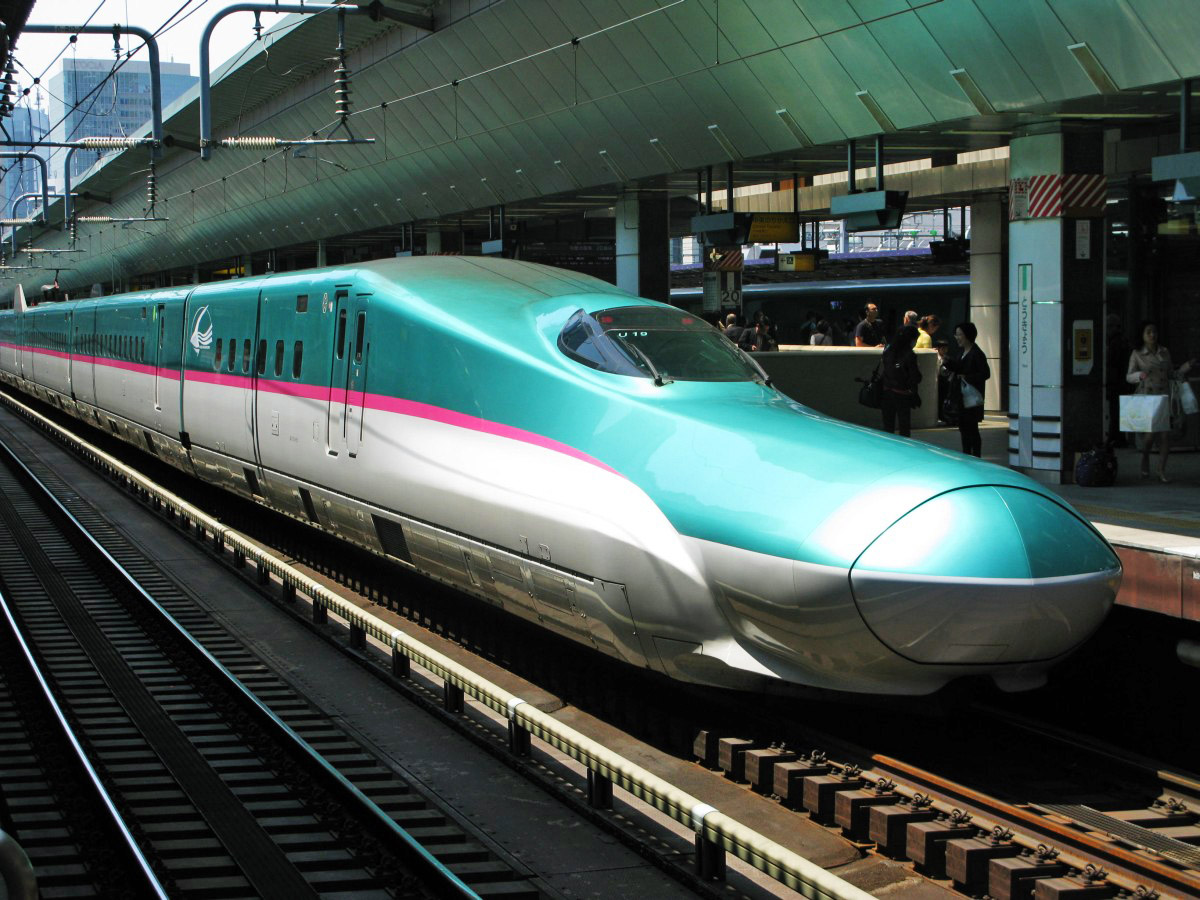
Shinkansen E5 Series on a Hayabusa service
Top Speed: 224 mph (360 km/h)
Country: Japan
Operator: JR East and JR Hokkaido
Operating since: 2011 and 2016
The Japanese Shinkansen E5 and H5 series trains both have electric active suspensions.
Faster and more pleasant than ever before, the latest generation E5 series trains are designed. It has an extended nose that extends 15 meters in front and cutting-edge braking technology that shortens the stopping distance even at high speeds.
The H5 series has a number of enhancements for cold climates, such as tough rubber to guard the connections between vehicles, upgraded snowplows on the lead units, and a stainless steel underframe to safeguard the electronics.
The design and maximum operational speed of both trains are the same. The bodyside stripe of the E5 series, which is pink, can be used to distinguish it from the H5, which has a lavender bodyside stripe. Another distinction is that the E5 series’ headlamps are standard halogen (have a whitish hue), whereas the H5 series’ are LED (has a yellowish glow).
Additionally, Japan has begun testing the world’s fastest bullet train, which has a top speed of 249 mph (400 km/h). It won’t likely start operating until 2025, though.
7. AGV 575

Top Speed: 224 mph (360 km/h)
Country: Italy
Operator: Nuovo Trasporto Viaggiatori
Operating since: 2012
Alstom produces the AGV 575 (Automotrice Grande Vitesse), a high-speed electric multiple-unit train that runs on a standard gauge. It has spacious internal compartments, an HVAC system, and amenities like onboard internet and lives television.
The train has a distributed traction system, synchronous permanent magnet motors, and articulated carriage construction. Compared to employing steel, it uses aluminum alloys to cut the vehicle’s overall weight by 1,500 pounds.
The train’s stiff body and the semi-rigid link between cars offer additional safety in the event of a collision or derailment, even though the train’s nose is equipped with a kinetic energy absorption unit to provide crash protection.
6. Bombardier Zefiro 380
Top Speed: 236 mph (380 km/h)
Country: China
Operator: China Railway Corporation
Operating since: 2012
The Zefiro is a brand-new series of extremely fast trains created by Bombardier Transportation. They were first introduced in China and are among the most affordable and environmentally friendly trains. They’re about to start operating in Italy right now.
The Zefiro 380 is brimming with appealing features, like roomy, aesthetically pleasing interiors, and an aerodynamic design that uses 20% less energy overall.
There are 85 trainsets operating in China at the moment. Each train has a maximum capacity of 1,336 passengers in a 16-car configuration and 650 passengers in an 8-car configuration.
5. CRH380A Hexie
Top Speed: 236 mph (380 km/h)
Country: China
Operator: China Railway Corporation
Operating since: 2010
Although it is capable of reaching even higher speeds, the CRH380A is designed to operate at a cruise speed of 217 mph (350 km/h). The original 8-car trainset has a top speed of 486 km/h (302 mph).
The train has been redesigned to operate at the new 236 mph (380 km/h) standard operating speed on recently built high-speed main lines. Although it is based on a foreign design, some claim that it utilizes unauthorized Shinkansen technology.
The train’s overall design includes a 95 percent maximum energy feedback rate for regenerative braking, a low-resistance, streamlined head, a highly pressurized tight body, and superior noise reduction technologies.
4. CRH380B/BL Hexie
CRH380BL at Shanghai Hongqiao Railway Station
Top Speed: 236 mph (380 km/h)
Country: China
Operator: China Railway Corporation
Operating since: 2011
A variant of the Siemens Velaro high-speed train is called the CRH380B/BL Hexie. 186 mph (300 km/h) is the top operating speed, while it is the potential of reaching far higher speeds.
It is a brand-new generation of electric multiple-unit trains designed for high speed on the CRH3C platform. The maximum design speed has increased from 217 mph (350 km/h) to 236 mph (380 km/h), the maximum test speed has increased to 249 mph (400 km/h), and the continuous operating speed has increased from 186 mph (300 km/h) to 217 mph (350 km/h).
The performance of the train is substantially enhanced by its aerodynamic design and increased traction power. Additionally, improvements have been made throughout time to the pressure control, cabin noise, and damping performance elements to increase comfort inside the car.
3. Frecciarossa 1000
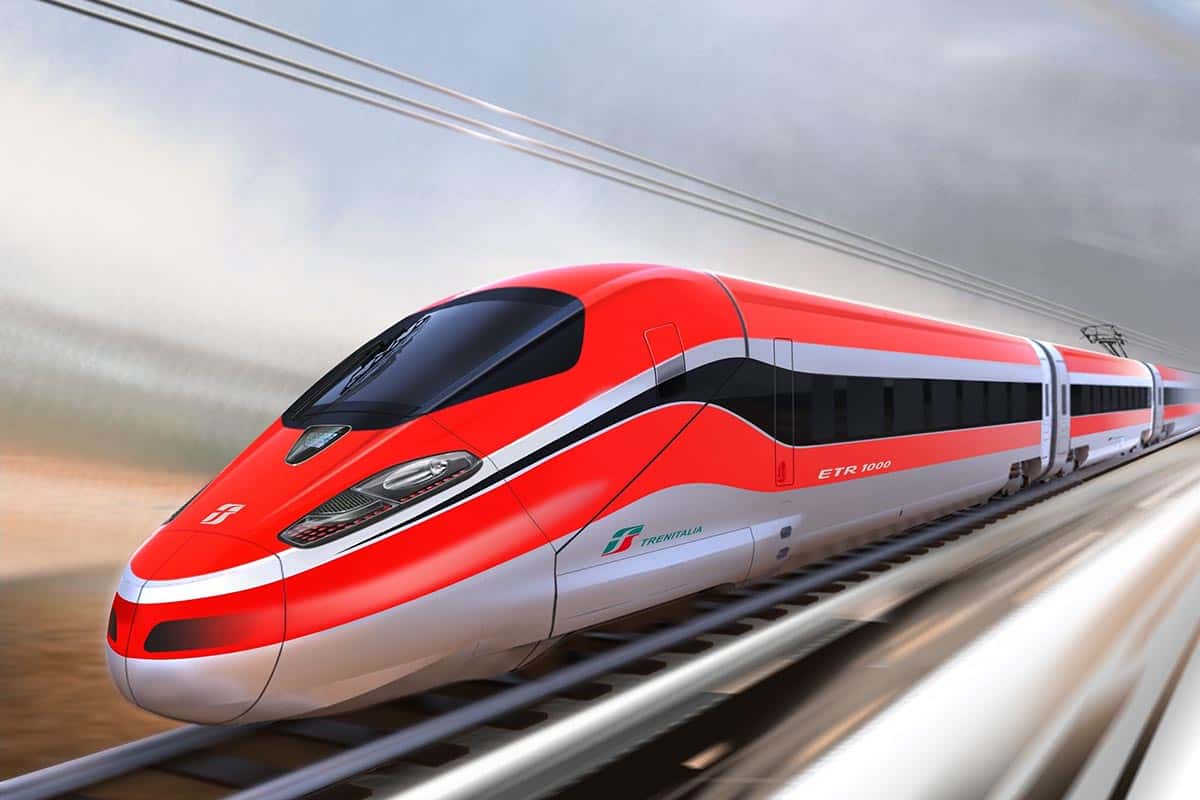
Top Speed: 249 mph (400 km/h)
Country: Italy
Operator: Trenitalia
Operating since: 2015
The new high-speed train, called Frecciarossa 1000, was created to adhere to the most cutting-edge methods. It is appropriate for long-distance passenger transportation and can travel on all high-speed networks in Europe.
Thanks to its 16 potent engines divided across all coaches, it provides a high-commercial speed of 223 mph (360 km/h). It can carry 485 passengers in four classes, including disabled passengers in tip-up seats.
The train has various environmentally friendly features and makes use of current energy-saving technologies. 95 percent of the materials used in this train are renewable, and up to 85 percent of those materials can be recycled.
2. Fuxing CR400AF/BF

CR400AF in silver and red livery
Top Speed: 261 mph (420 km/h)
Country: China
Operator: China Railway Corporation
Operating since: 2016
Electric multiple unit high-speed trains called Fuxing are a series. With a design speed of 217 mph (350 km/h), two of its variants—the CR400AF and CR400BF—are the fastest non-maglev trains in operation at the moment.
Both of the two variations of the word “Fuxing,” which means “rejuvenation,” have been given nicknames: CR400AF stands for “Blue/Red Dolphin,” and CR400BF for “Golden Phoenix.”
1. Shanghai Maglev
Both the two variations of the word “Fuxing,” which means “rejuvenation,” have been given nicknames: CR400AF stands for “Blue/Red Dolphin,” and CR400BF for “Golden Phoenix.”
Image credit: Alex Needham/Wikimedia
Top Speed: 268 mph (431 km/h)
Country: China
Operator: Shanghai Maglev Transportation Development
Operating since: 2004
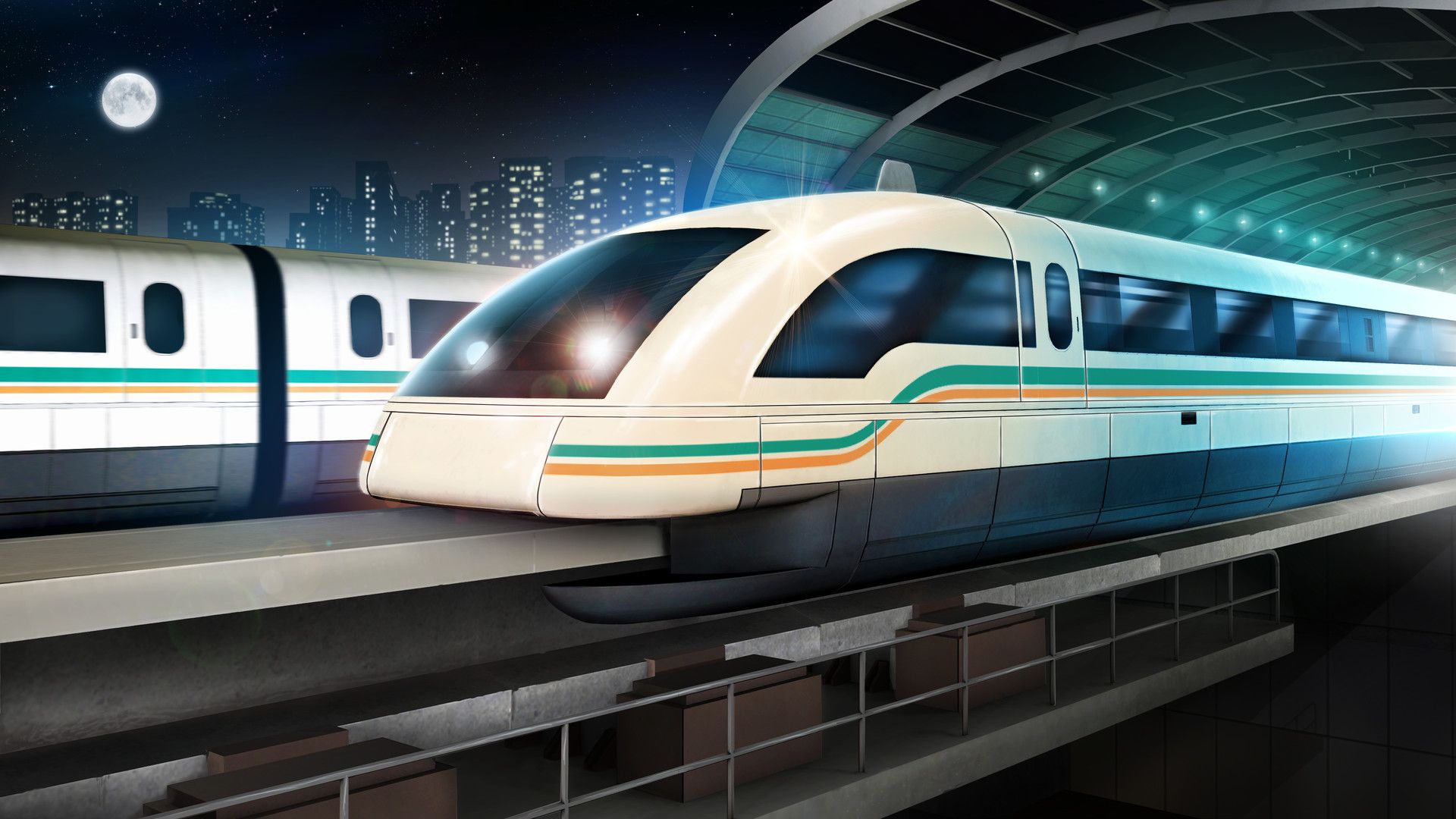
With assistance from German engineers, the Shanghai Maglev is the world’s fastest commercial electric train. It is the first and oldest high-speed commercial maglev system that is still in use.
It cost $1.3 billion and 2.5 years to finish the project. The line has a track length of 18.53 miles (20.5 km) and an additional track just for maintenance.
According to records, no profits have been made by the company. Shanghai Maglev loses millions of dollars annually as a result of the high operational expenses and poor passenger traffic.
Read More About Top 10 Most Expensive Private Jets In The World
 Travel Guide And Information